



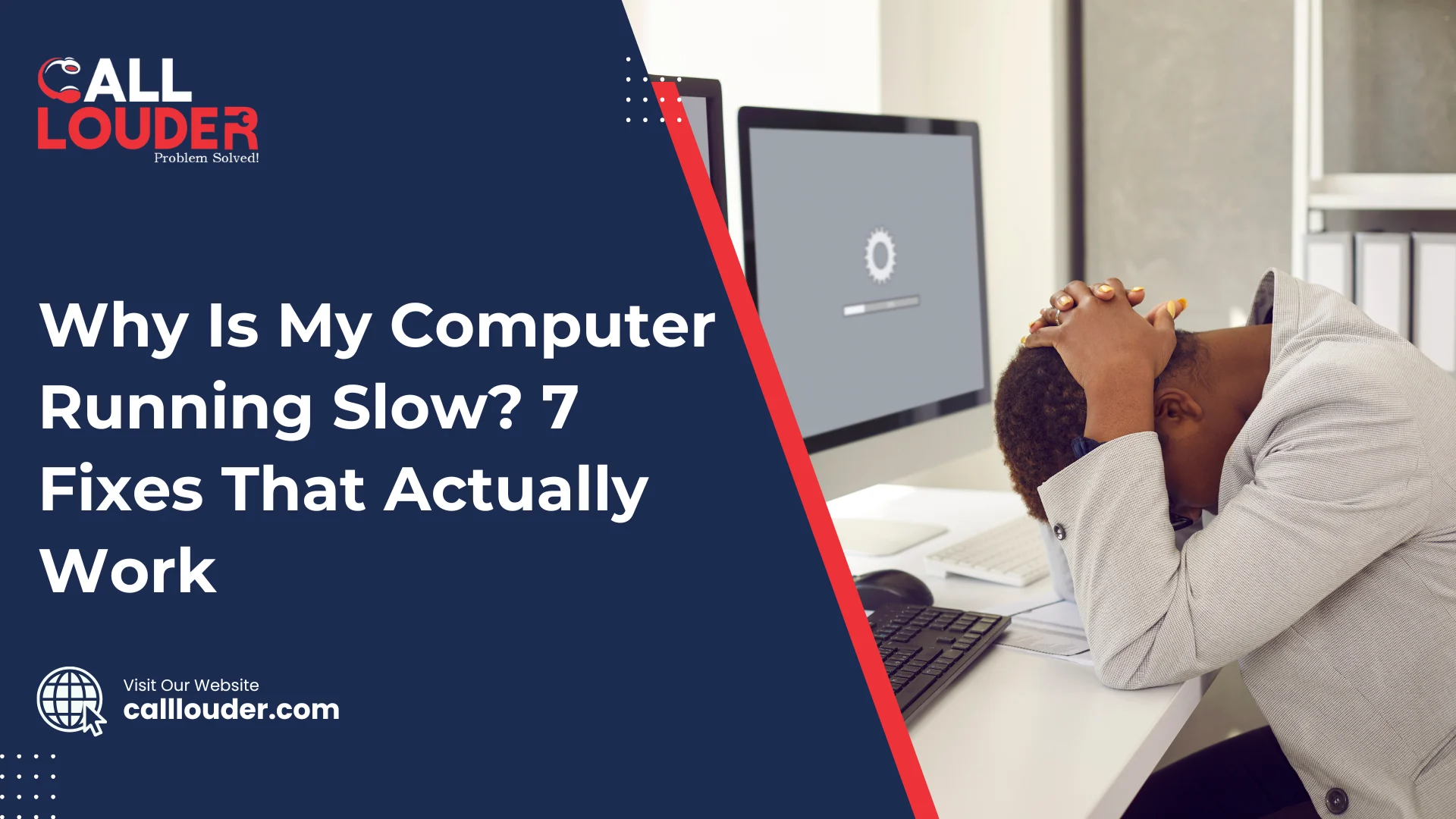
Does your computer take an eternity to start, or does it freeze during simple tasks? A slow computer can be very frustrating, whether you’re working, browsing or gaming. It wastes time, lowers productivity and can even affect your enjoyment of games or videos.
If you want to fix your slow computer, here are 7 proven solutions that work for both Windows and macOS. With the 7 fixes below, you can speed up your PC and avoid unnecessary PC repair, as well as get reliable computer support without stress.
Why Is My Computer Running Slow?
There are a few common reasons that may have slowed down your computer. Most computers often lag simply due to low memory, too many apps running in the background, outdated software, malware, or a failing hard drive. Regular maintenance and updates can help a lot and improve performance significantly.
Common Reasons for a Slow Computer
- Too many startup programs are running automatically
- Not enough RAM or storage space for tasks
- Outdated drivers or operating system
- Malware or viruses affecting the speed
- Overheating hardware reducing performance
- Fragmented hard drive or failing SSD
- Heavy browser extensions using system resources
Most of these problems can be fixed with simple steps to get your computer running smoothly again.
7 Fixes That Actually Work for a Slow Computer
If your search query includes “How can I fix my slow computer?”, there are a number of options to improve the performance of your device. From cleaning up startup programs to updating software and removing malware, these fixes can all help to speed up your PC.
1. Close Unnecessary Background Programs
You can use Task Manager on Windows or Activity Monitor on Mac. Identify the applications that are using a lot of memory and close them. You should also disable any unwanted start up programs to improve efficiency.
Tip: The fewer applications that are open and running in the background, the faster the PC will run!
2. Check for Malware or Viruses
Run a complete scan of your computer using your antivirus program and get rid of any files or browser add-ons that look suspicious to you. Tools like Windows Defender or Malwarebytes can make this process even quicker and easier.
Note: Even just one malware infection can really slow your computer down, so it’s worth checking regularly to keep things running smoothly.
3. Update Your System and Drivers
Outdated operating systems or drivers can cause lag as well as compatibility issues.
- Windows: Settings → Update & Security → Windows Update
- Mac: System Preferences → Software Update
Also, keep graphics and chipset drivers up to date.
4. Free Up Disk Space
Delete unwanted temporary files and downloads, and uninstall any applications you don’t use. Make sure to empty your recycle bin (or trash). Windows and Mac have built-in ways to manage your storage; on Windows, you can use Storage Sense, and on Mac, you can use Optimize Storage.
Quick Fix: Freeing up anywhere from 10-20 percent of your total disk space can noticeably speed up your computer.
5. Upgrade to SSD or Add More RAM
HDDs slow down over time. Upgrading to an SSD can make your PC up to 5x faster. More RAM (8GB+) makes multitasking much easier.
Need help setting up new hardware? Reach out to CallLouder’s PC repair experts for professional computer support.
6. Clean Your System Physically
Dust buildup can cause overheating and slow performance. Clean fans, vents, and internal parts carefully using compressed air or professional services. A clean PC runs cooler and faster.
7. Reset or Reinstall the Operating System
If nothing else works, the last resort is to do a clean OS reinstall can remove deep system issues. Remember to back up your data first, then reinstall Windows or macOS.
If you want an expert opinion, try CallLouder’s computer support for safe PC repair and guidance.
These are the proven steps to help rectify a slow computer and get your system working fast again.
Bonus Tips to Keep Your Computer Running Smoothly
- Restart your computer weekly to clear memory and refresh the system.
- Disable heavy browser extensions that can slow down browsing and overall performance.
- Use lightweight antivirus tools to protect your PC without using too many resources.
- Keep your desktop clean as too many icons can slow startup times.
- Regularly defragment HDDs (skip this for SSDs) to keep file access fast and efficient.
When to Contact a Professional
When should I reach out to a computer support service? Is your PC repeatedly freezing, displaying disk error messages, or overheating? These are signs that you may need to reach out for professional help. Professionals can identify more serious issues, such as hardware failure or operating system issues that are hard to fix on your own.
Still having issues with a slow PC? Get a full system checkup from CallLouder’s PC Repair Experts. We fix slow computers, remove malware, and repair hardware to make sure your computer is running at its best.
FAQs
There are a number of reasons a computer might slow down unexpectedly. Too many open apps in the background, malware, outdated software, or low disk space are the most common causes. Cleaning your system and updating it usually helps.
Yes. Many issues, like background apps, malware, or excessive storage, can be fixed without adding more hardware. Upgrades help if your PC is older or has very little RAM or an HDD.
To maintain optimal computer performance and safety, system updates and driver updates should be installed regularly, preferably at least once a month.
Yes, all it takes is one virus or malicious program to use system resources and slow down a computer and cause crashes. Running an antivirus scan often resolves this problem.
Contact a computer support service if your PC freezes frequently, overheats, shows disk errors, or fails to start. Professionals can handle hardware issues, malware, and OS problems safely.